
Technology
What is Tandem LA-LIBS?
Introduction
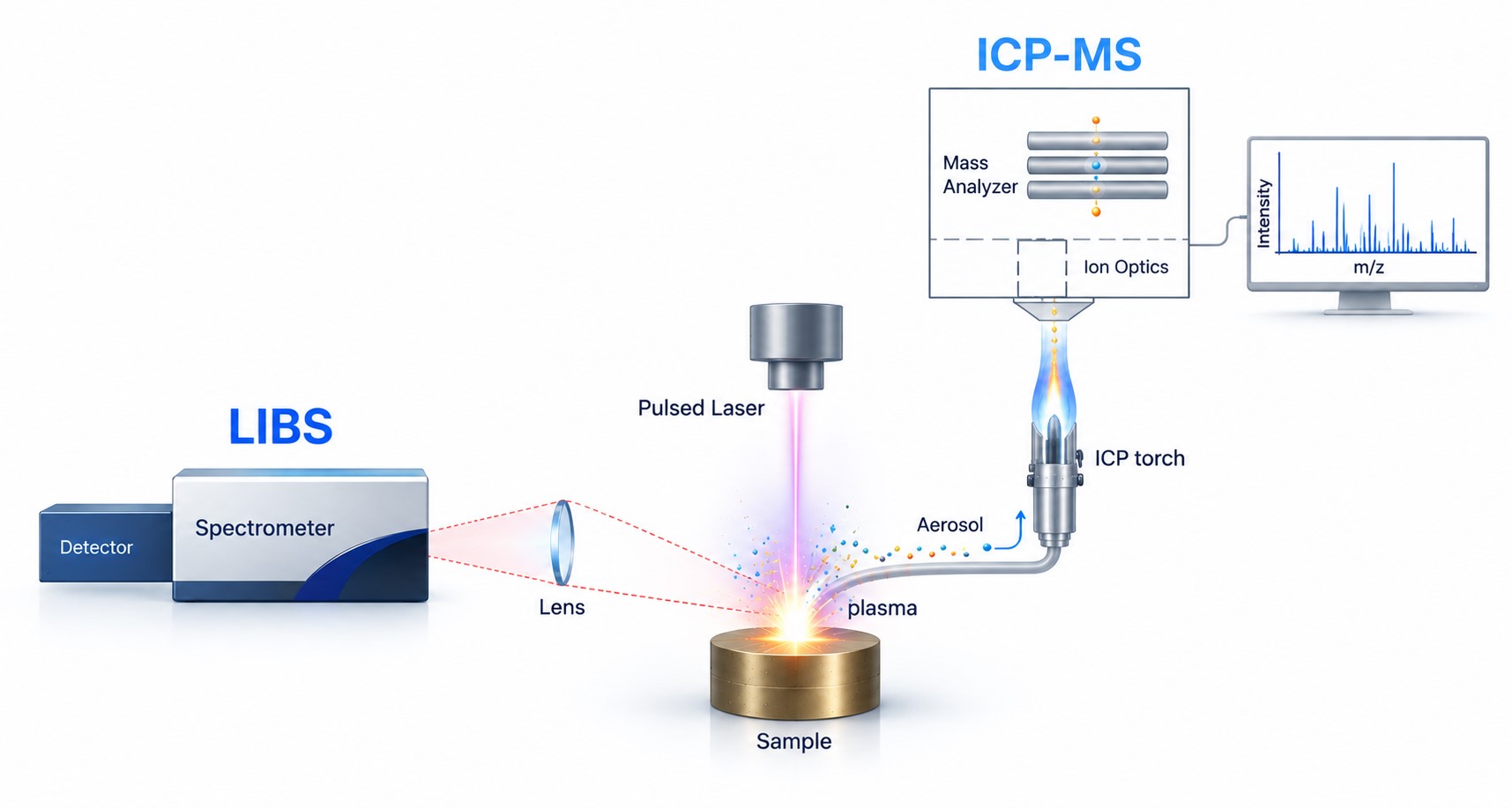
Tandem LA-LIBS is an integrated analytical technology that combines Laser Ablation (LA), Laser-Induced Breakdown Spectroscopy (LIBS), and ICP-MS into a single measurement platform. During every laser pulse, both LIBS and LA-ICP-MS data are collected simultaneously, providing complementary elemental and isotopic information from the exact same sampling location. This approach expands analytical capability while reducing sample preparation and analysis time.
Key Advantages
- Simultaneous LIBS and LA-ICP-MS measurements
- Direct solid sample analysis with minimal sample preparation
- Comprehensive elemental coverage from light elements to trace elements and isotopes
- Preservation of spatial and depth information
- Reduced analysis time and laboratory workflow
- Single integrated instrument and software platform
- Data fusion for improved analytical confidence
Why is Tandem Needed?
- Modern ICP-OES and ICP-MS instruments provide excellent elemental and isotopic measurements. However, most solid samples require labor-intensive acid digestion before analysis. This process is time-consuming, creates chemical waste, destroys spatial information, and increases analytical costs.
- Laser ablation eliminates many of these limitations by directly removing microscopic amounts of material from the sample surface for analysis, preserving the sample's spatial characteristics while minimizing preparation.
How Does Tandem LA-LIBS Work?
During a single laser pulse:
- The laser ablates a microscopic amount of material from the sample.
- A high-temperature plasma is generated at the sample surface.
- The plasma emission is analyzed by the LIBS spectrometer.
- The ablated aerosol is transported to the ICP-MS.
- Both analytical techniques measure the same sampling location simultaneously.
This produces two complementary datasets from every laser pulse.
Why Combine LIBS and LA-ICP-MS?
| LIBS | LA-ICP-MS |
|---|---|
| Light elements | Trace elements |
| Major elements | Heavy elements |
| Halogens | Isotopic analysis |
| Rapid optical emission | High sensitivity |
By combining these techniques, Tandem LA-LIBS provides analytical capabilities that normally require several independent instruments.
Data Fusion
Because LIBS and ICP-MS measure the same laser event, their data can be correlated to improve interpretation and quantitative analysis.
Benefits include:
- Improved normalization
- Better calibration strategies
- Enhanced quantitative analysis
- Identification of ICP-MS spectral interferences
- Greater confidence in analytical results
This simultaneous acquisition is one of the unique advantages of the Tandem platform.
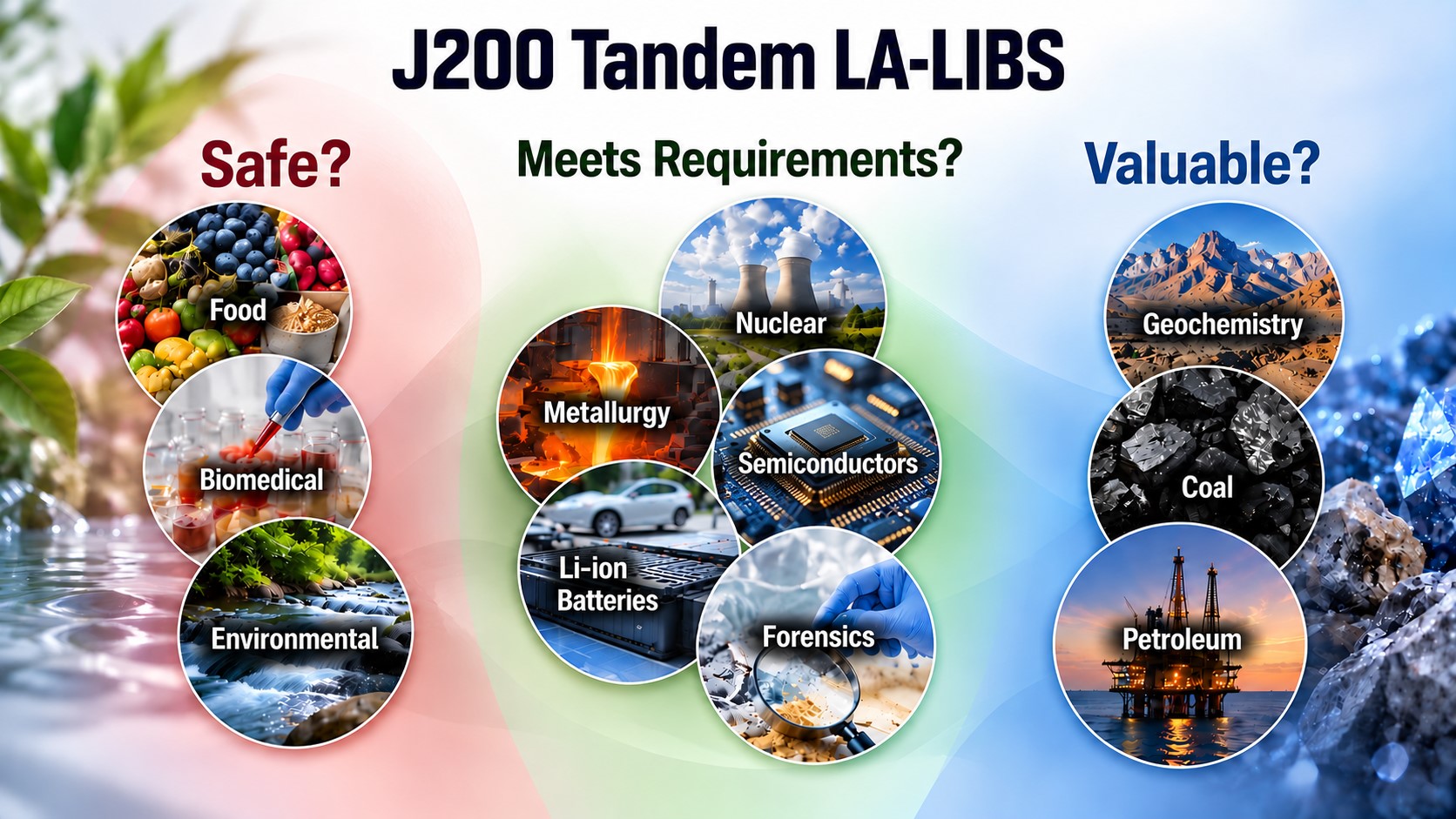
Typical Applications
| Application | LA-ICP-MS | LIBS |
|---|---|---|
| Forensics | U, Pb | Ca, Si, C, O, N, H |
| Geological, Environmental | Pb, U, Th, REE’s, Sr, Se, As | O, N, H, Li, Be, Na, K, Ca, Si, Al, Fe, Cl, Br, F, Ar, Ti, Sr, Rb, Mg, B |
| Energy (batteries, solar) | Fe, Cu, Ni, Zn, Pb, Cd, etc. | C, H, Si, Li, Pt, Rh etc. |
| Nuclear | U, Pu, Th, Pb | Be, Li, O, H, D, B, F, N |
| Food | Low concentration metals, As, Se | C, S, N, Na, Li, K |
| Metallurgic | Fe, Al, Ta, Cr, Zn, etc. | C, S, P, H, O, N |
| Coal | LA-ICP-OES: Ideal, too much carbon deposits issues for MS | H, C, N, O; H/C ratio |
| Petroleum (crude oil derivatives, catalyst) | LA-ICP-OES: Ideal, too much carbon deposits issues for MS | H, C, N, O; H/C ratio |
| Semiconductor | Ti, V, Mn, Fe, Ni, Cr, Zn, etc. | C, H, Si, Cu, Au, Ta |
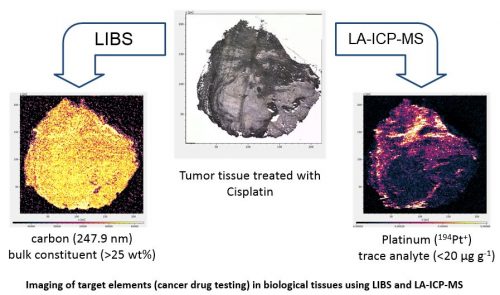
| Bio-medical | Cu, Zn, Pt, Au | C, S, P, H, O, N |
Conclusion
Tandem LA-LIBS represents a significant advancement in direct solid sample analysis by integrating LIBS and LA-ICP-MS into a single instrument. By combining complementary analytical techniques, researchers can obtain comprehensive elemental and isotopic information from the same sampling location while reducing sample preparation, preserving spatial information, and improving laboratory productivity.